Tuesday, August 16, 2016

[Game Review] ROD: Revolt of Defense

Disclaimer: I have not yet played No Man's Sky, but I do plan to. All mentions of the game are based off of the current public opinion of the game for explanatory purposes, not legitimate criticisms of the game. 


With No Man's Sky releasing last week, procedurally generated games are on everyone's lips. What was once an exciting new (or, at least, newly popular) technology for games has now become a warning for players. Minecraft did procedural generation perfectly, adding just enough categories of generation to create varying worlds without making the whole thing feel samey. And that's really the crux of the issue with procedural games: either the game has very little variety (to make generation easy), or there is so much variety in such a mild way that it all ends up feeling a bit like you are seeing the same level or place, even if the floor plan is different.

ROD: Revolt of Defense is a procedurally generated space exploration game, just like No Man's Sky, but unlike No Man's Sky, ROD keeps its scope small. Instead of a galaxy of 18 Quintilian planets, ROD has only a handful, and they aren't planets so much as floating grids, like chess boards, each grid piece having the chance to spawn a different resources. The goal of the game is to find six planets indicated on your map and destroy all of the towers on them to access the center of the small universe. To do this, you need to build towers on your own grid, which acts as your ship. The resources on each planet can give you stone and wood to build buildings and towers, fuel for your ship, chests which can contain the other resources and also money, artifacts which give you various buffs, and other people, which are used to man the towers or explore the various planets for resources. Some of the planets are inhabited, requiring you to defeat their towers before pillaging their homes, while others act as a store for you to buy resources, or a repair shop where you can purchase upgrades and heal any of your buildings.

It's a simple game, but it takes a bit of time to build up enough resources to take on the 6 planets in order to reach the end game, and that time can take its tole given the game doesn't have a save feature. But what the game accomplishes is a meditative atmosphere, partially due to its relaxing soundtrack, that most procedural games try to avoid. The relaxing atmosphere of ROD is counter to most game design: hook 'em fast, hook 'em hard, and hook 'em long. ROD doesn't want you to play it forever, and the procedural aspect gives it some replay value, but the game isn't a lot different on a new playthrough. And this is what procedural generation can do well right now: it can create worlds to explore and to get lost in, but not necessarily worlds with a lot to do. ROD doesn't excel in this by any means, but it does a solid job, and for $0.99 you can't really do much better.

ROD puts genre tropes from tower defense, procedural games, and exploration games into a blender and creates something simple and not too demanding. It's the opposite of the long-play style of No Man's Sky, and other procedural games. It even exists opposite Minecraft, with it's limitless world and customization. ROD exists within limits, both in time and scope, and lets you drift within it's borders.

7.0

Sunday, August 7, 2016

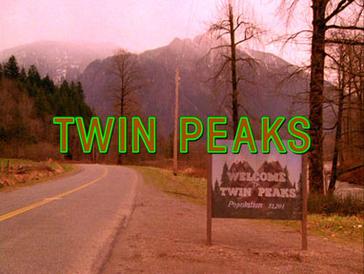
Show Review: Twin Peaks


David Lynch's cult following and influence are so large it feels like he is practically main stream, but the only time that was ever close to true was with Twin Peaks. Combining the dark and surreal bend on Americana Lynch is famous for with the tropes and framework of a TV soap opera, Twin Peaks helped shape the TV series and what it could do, ushering in the era that would eventually lead to The Sopranos, The Wire, and Breaking Bad.

Twin Peaks concerns the titular small town and the death of Laura Palmer, a good-hearted high school prom queen who has it all and is loved by everyone. But, as FBI agent Dale Cooper soon finds out in his investigation,  she and everyone else in Twin Peaks have a lot of secrets, many of which intertwine with Laura's disturbing secret life. The show plays comfortably to the soap opera conventions, with infidelity being the primary secret everyone in town holds, but also concerns drug use, prostitution, and many other dramatic plot twists that seem to come several times an episode. It could easily play up the overacting for humor or for irony, but instead the writers decide to play it legitimately: this isn't real, but it doesn't have to be. But Lynch and Mark Frost, the co-creator of Twin Peaks, have crafted a world where melodrama and camp can lead to something very real.

David Lynch's strengths have always been contrasting the idealistic American with the shameful, often frightening desires they hold in, and Twin Peaks is pretty much that to a 'T'. Utilizing the cliches of soap operas and mixing it thickly with paranormal intrigue, Lynch and Frost let us know that we aren't the only ones desiring that American Dream, but that underneath its sheen is unrest. And in the very early 90s, that unrest was something never before seen on TV.

Twin Peaks' big claim to fame is really just how weird it is. There are surrealistic dreams of backwards-talking midgets, a spiritual (or perhaps alien?) presence in the woods, and a malevolent entity known as Bob, all of which exist in the back drop of a small town Melrose Place. But beyond its weirdness there was a desire to understand. Each new clue as to who killed Laura Palmer always felt like the killer's reveal was just around the corner (an addictive recipe used to great affect by Lost and The X-Files, two shows obviously influenced by Twin Peaks), no matter how weird that clue was. The truth of the matter is that the show's weirdness may have made it perfect for water cooler fodder, but what really kept people watching was just how engaging it was. The writing was sharp, the acting usually purposely melodramatic (but could be reined in and serious on a dime), and the strong use of cinematography, lighting, and music created a living, breathing world that felt far more artistic than anything that had ever been on TV before. There's a Citizen Kane quality to how influential this show was for all it did first or did well. But most importantly, it made the showrunner an auteur.

The show didn't hold up its quality through its run, however. The show suffers greatly from feeling more like two shows, written by three different people. The first season is just about as perfect as you can get with anything David Lynch works on. It builds the mystery nicely, introduces us to all of the characters, and ends with a bang (or three). The second season starts somewhat slowly. It feels like the gears have been changed somewhat, but the build up to the reveal of Laura's killer mid-season is still great and effective (as well as occasionally terrifying). The last half of season 2, however, while particularly bad, doesn't seem to know where it is going. What was kind of weird in season 1, and pretty damn weird in early season 2, begins to pale in comparison to some of the downright confusing things happening in the latter season 2. And since Laura's murder has been somewhat solved, the show tries to migrate farther into its deeper mythology, most of which is difficult to follow and feels like a completely different show. Its hard to go into specifics without spoiling too much for those who haven't ever watched, but the crux of it is that Twin Peaks felt like it was turning into a run on sentence without a period in sight. It gets exhausting.

There are some reasons for this change in quality (David Lynch leaving and coming back, poor handling by ABC, and many other problems), but it doesn't matter too much. Despite its flaws,  Twin Peaks is an incredibly unique show and experience that has yet to be recreated. There have been attempts, but none felt quite so other worldly, so dream like. If Twin Peaks could be described in two words it would be like that: dream like. Desire and pain meet in the small town of Twin Peaks, creating a perfect storm of strange, and one of the great TV calssics.

10


Sunday, July 31, 2016

Game Review: Crash Bandicoot 2

When the jump to 3D inevitably happened in the 90s, Crash Bandicoot was Sony's (or, more accurately, Naughty Dog's) interpretation of the platformer for the new tech. While Super Mario 64 gave us small open worlds to explore and hunt for stars in, Crash Bandicoot reinterpreted the platformer more literally. That is, like the Marios and Sonics before it, Crash was a game about moving in roughly one direction while jumping, attacking, sliding, and smashing your way through obstacles. And it was a big hit for it.

Crash Bandicoot 2: The Wrath of Cortex continues roughly where the last game left off. I think. I never actually finished the first game as younger me found it to be too difficult. Crash 2 on the other hand seemed to be just the right amount of difficulty, and became darling to my younger self partially due to it being one of the first games I ever beat on my own. Now that I am older and have a whole trove of games beaten, how does the game hold up?

Pretty good, for the most part. Smashing through crates is still incredibly fun, and the controls are responsive and satisfying. The camera-on-rails works a lot better than Mario 64's awful camera, too. That being said, there are levels where the game has you playing in the classic 2D sidescroller format where instead of running forward you are now running to the right of screen. While playing these levels I would find myself running and jumping off of the side of the path towards the camera because I didn't have a very good view of where Crash was moving. Something about the 3D Crash in the 2D-styled (sometimes called 2.5D nowadays) gameplay made it difficult to stay on the path, which became a mild annoyance throughout. Otherwise, though, the basics where pretty solid, and the animation is still impressive today when you compare it to the robotic looks of Crash's contemporaries. The developers of Crash famously detailed how they accomplished this in their blog posts, so I won't go on about it too much here.

The game is far from perfect, however. The fact that every level has a Bonus level is pretty tedious by the time you get half way through the game. I understand  it was a way to bridge the 2D platforming with the 3D platforming, but as I said before I'm not particularly a fan of how that 2D platforming was handled. Not to mention the only real reason to need a bonus level is to rack up lives, of which you will have plenty from the first handful of levels so long as you aren't absolutely new to videogames. And I suppose that is another problem: I'm quite a bit better than the kids this game was aimed at. That isn't really a knock on the game, since the difficulty is still within the bounds of being fun, but it made the life system almost pointless. I never dipped below 27-30 lives at any given time.

Even the boss fights weren't enough to really put up a challenge. The boss fights (outside of the last one, which is a boring disappointment) where fun in their own right, but rarely took more than a couple tries as you memorized their very obvious and easily avoided attack patterns. Once again, this is a game aimed at kids so I can't really knock them for it. What I can knock them for, however, is the boring last boss. The game builds up to a final boss battle against Cortex, the series' version of Bowser (complete with his own 'power stars' in the form of 'crystals'), which consists of you chasing him through space while in a jetpack with the awful controls. The jetpack had shown up in two levels previously, and both were among my least favorite levels in the entire game because they were so horrible to control. And in this boss fight, you dodge a few asteroids, gain up on Cortex, do a spin attack and repeat three times until he's done. I beat him on my first try without really trying.  All in all, I would say he was one of the easiest bosses in the game, which isn't exactly what you want out of a final boss.

Despite that let down, most of the game's levels a very fun. The game does a good job layering in obstacles for Crash to dodge and jump over, and every once in awhile it will throw you something completely new like the boulder levels or the levels where you ride a polar bear cub. As far as level variance, this game does well. But the very structure of this game is a bit confusing. What's the point in collecting these crystals, exactly? The gems I understand as you either have to beat a secret level or destroy every box on a level, but the crystals themselves required to beat the game just appear in the path of the level. The level itself is little more than a path, so beating the level would seem like enough of an accomplishment. All the crystals really do is give the game a plot (and you a reason to track through the levels), but given you could beat a level and just avoid the crystal seems like a bit of an oversight. What's the point in that, exactly? Isn't the point of the game to beat all of the levels so we can get to the boss fights? Then why do I have to grab a crystal along the way for it to count? In Mario 64 at least the world's were open, so the Stars you collected had to be found. If you miss a crystal in Crash Bandicoot you're either blind or you took a secret level to the ending, which always inconveniently started before the crystal shows up, and drops you off considerably after.

Besides all of that, Crash is just plain fun. The controls are spot on (outside of the jetpack levels) and the game is just about the right length before I get bored. I'm not entirely sure if I would say Crash was particularly innovative in anything (besides looking good), but it was an above average release that deserves to be competitive with, even if it isn't quite as good as, Mario 64.

8.5