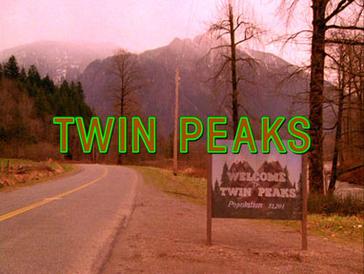
David Lynch's cult following and influence are so large it feels like he is practically main stream, but the only time that was ever close to true was with Twin Peaks. Combining the dark and surreal bend on Americana Lynch is famous for with the tropes and framework of a TV soap opera, Twin Peaks helped shape the TV series and what it could do, ushering in the era that would eventually lead to The Sopranos, The Wire, and Breaking Bad.
Twin Peaks concerns the titular small town and the death of Laura Palmer, a good-hearted high school prom queen who has it all and is loved by everyone. But, as FBI agent Dale Cooper soon finds out in his investigation, she and everyone else in Twin Peaks have a lot of secrets, many of which intertwine with Laura's disturbing secret life. The show plays comfortably to the soap opera conventions, with infidelity being the primary secret everyone in town holds, but also concerns drug use, prostitution, and many other dramatic plot twists that seem to come several times an episode. It could easily play up the overacting for humor or for irony, but instead the writers decide to play it legitimately: this isn't real, but it doesn't have to be. But Lynch and Mark Frost, the co-creator of Twin Peaks, have crafted a world where melodrama and camp can lead to something very real.
David Lynch's strengths have always been contrasting the idealistic American with the shameful, often frightening desires they hold in, and Twin Peaks is pretty much that to a 'T'. Utilizing the cliches of soap operas and mixing it thickly with paranormal intrigue, Lynch and Frost let us know that we aren't the only ones desiring that American Dream, but that underneath its sheen is unrest. And in the very early 90s, that unrest was something never before seen on TV.
Twin Peaks' big claim to fame is really just how weird it is. There are surrealistic dreams of backwards-talking midgets, a spiritual (or perhaps alien?) presence in the woods, and a malevolent entity known as Bob, all of which exist in the back drop of a small town Melrose Place. But beyond its weirdness there was a desire to understand. Each new clue as to who killed Laura Palmer always felt like the killer's reveal was just around the corner (an addictive recipe used to great affect by Lost and The X-Files, two shows obviously influenced by Twin Peaks), no matter how weird that clue was. The truth of the matter is that the show's weirdness may have made it perfect for water cooler fodder, but what really kept people watching was just how engaging it was. The writing was sharp, the acting usually purposely melodramatic (but could be reined in and serious on a dime), and the strong use of cinematography, lighting, and music created a living, breathing world that felt far more artistic than anything that had ever been on TV before. There's a Citizen Kane quality to how influential this show was for all it did first or did well. But most importantly, it made the showrunner an auteur.
The show didn't hold up its quality through its run, however. The show suffers greatly from feeling more like two shows, written by three different people. The first season is just about as perfect as you can get with anything David Lynch works on. It builds the mystery nicely, introduces us to all of the characters, and ends with a bang (or three). The second season starts somewhat slowly. It feels like the gears have been changed somewhat, but the build up to the reveal of Laura's killer mid-season is still great and effective (as well as occasionally terrifying). The last half of season 2, however, while particularly bad, doesn't seem to know where it is going. What was kind of weird in season 1, and pretty damn weird in early season 2, begins to pale in comparison to some of the downright confusing things happening in the latter season 2. And since Laura's murder has been somewhat solved, the show tries to migrate farther into its deeper mythology, most of which is difficult to follow and feels like a completely different show. Its hard to go into specifics without spoiling too much for those who haven't ever watched, but the crux of it is that Twin Peaks felt like it was turning into a run on sentence without a period in sight. It gets exhausting.
There are some reasons for this change in quality (David Lynch leaving and coming back, poor handling by ABC, and many other problems), but it doesn't matter too much. Despite its flaws, Twin Peaks is an incredibly unique show and experience that has yet to be recreated. There have been attempts, but none felt quite so other worldly, so dream like. If Twin Peaks could be described in two words it would be like that: dream like. Desire and pain meet in the small town of Twin Peaks, creating a perfect storm of strange, and one of the great TV calssics.
10

No comments:
Post a Comment